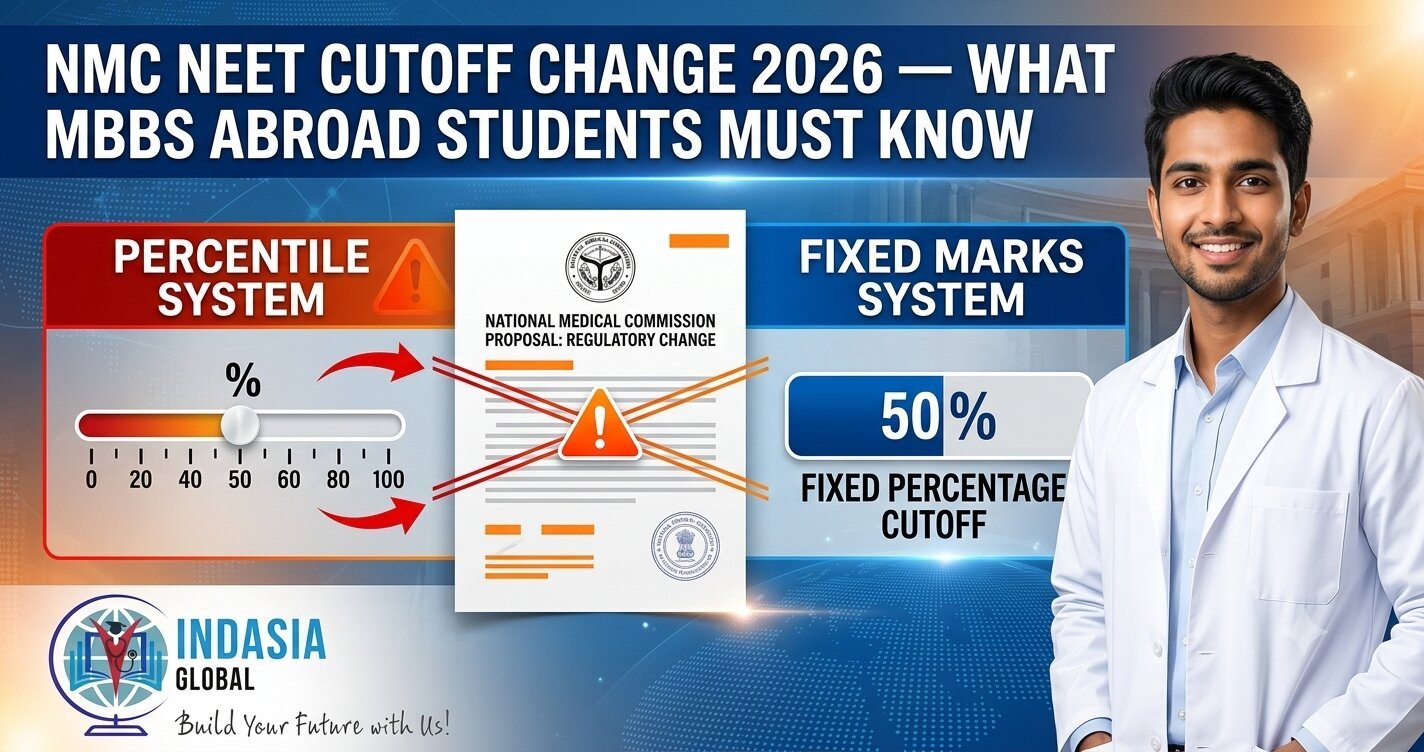
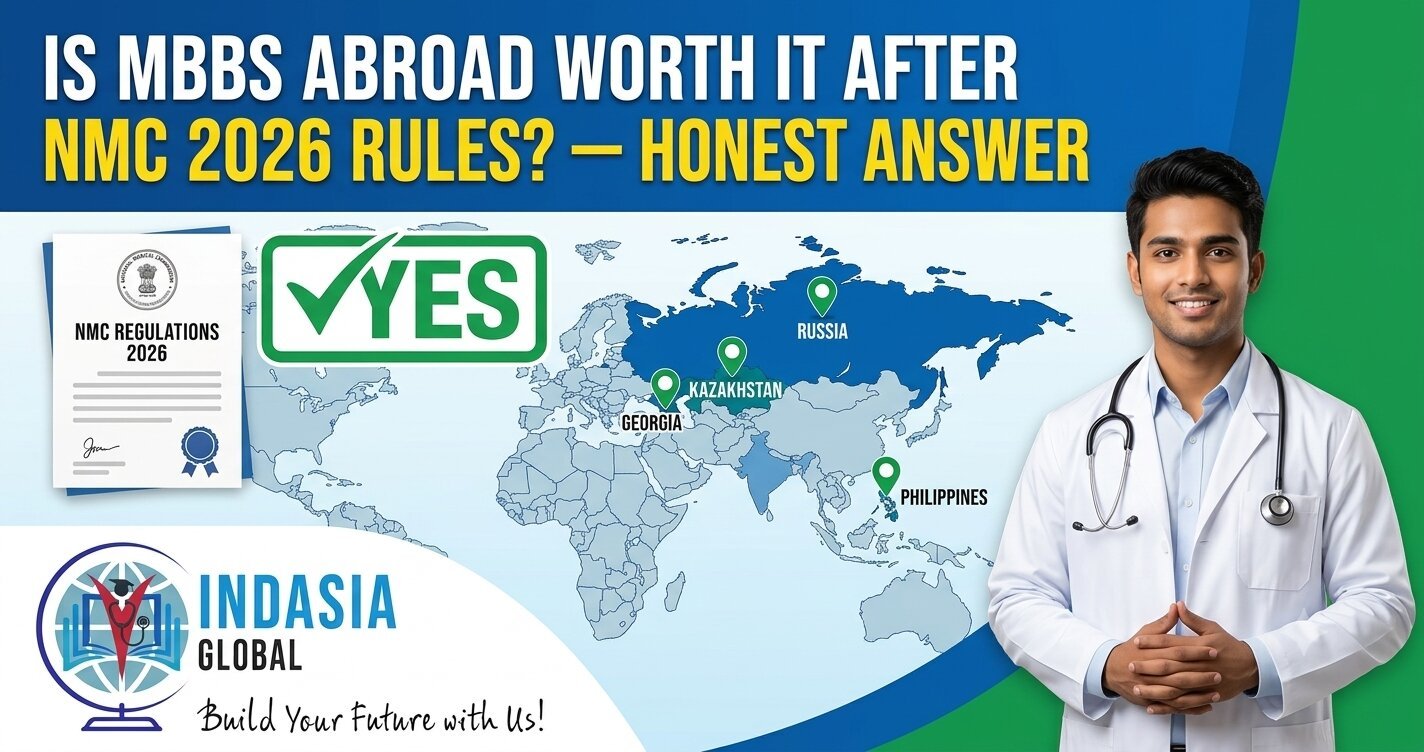
Every few months, a new set of NMC guidelines, advisories, or regulatory updates triggers the same question in families across India: “Is MBBS abroad still worth it?” With the 2026 updates including stricter English-medium requirements, Uzbekistan university warnings, Georgia state university closures for foreign students, and the ongoing FMGE-to-NExT transition, this question deserves a direct, honest answer based on what has actually changed.
What Has Actually Changed in 2026 — A Verified Summary
Before assessing whether MBBS abroad is still worth it, it is essential to distinguish between what has genuinely changed and what has not.
What changed in 2026:
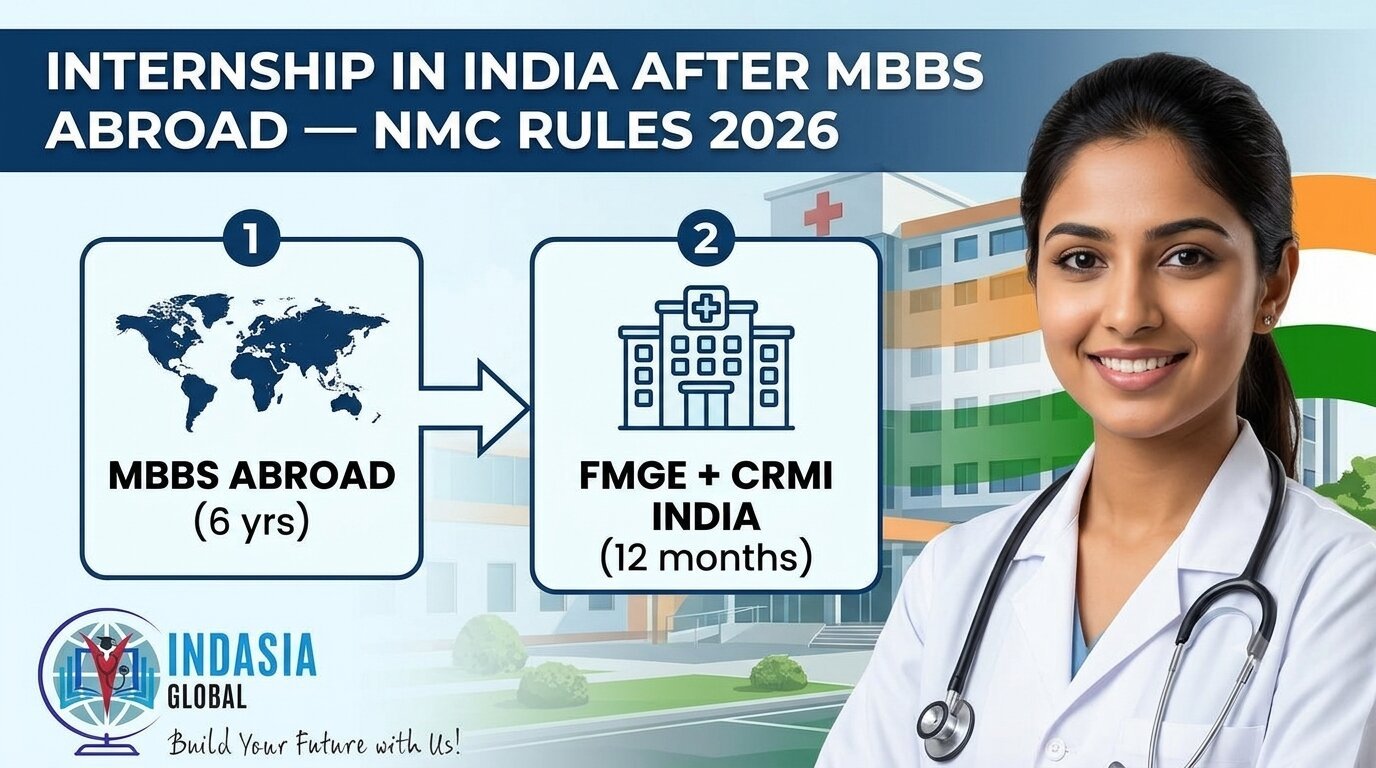
The NMC’s 2026 updates primarily revolve around FMGE eligibility, NExT implementation, internship requirements, clinical training standards and foreign medical degrees recognition. The NMC has clarified that an FMG will have to follow all the Foreign Medical Graduate Licentiate Regulations 2021 if he or she wants to practice medicine in India.
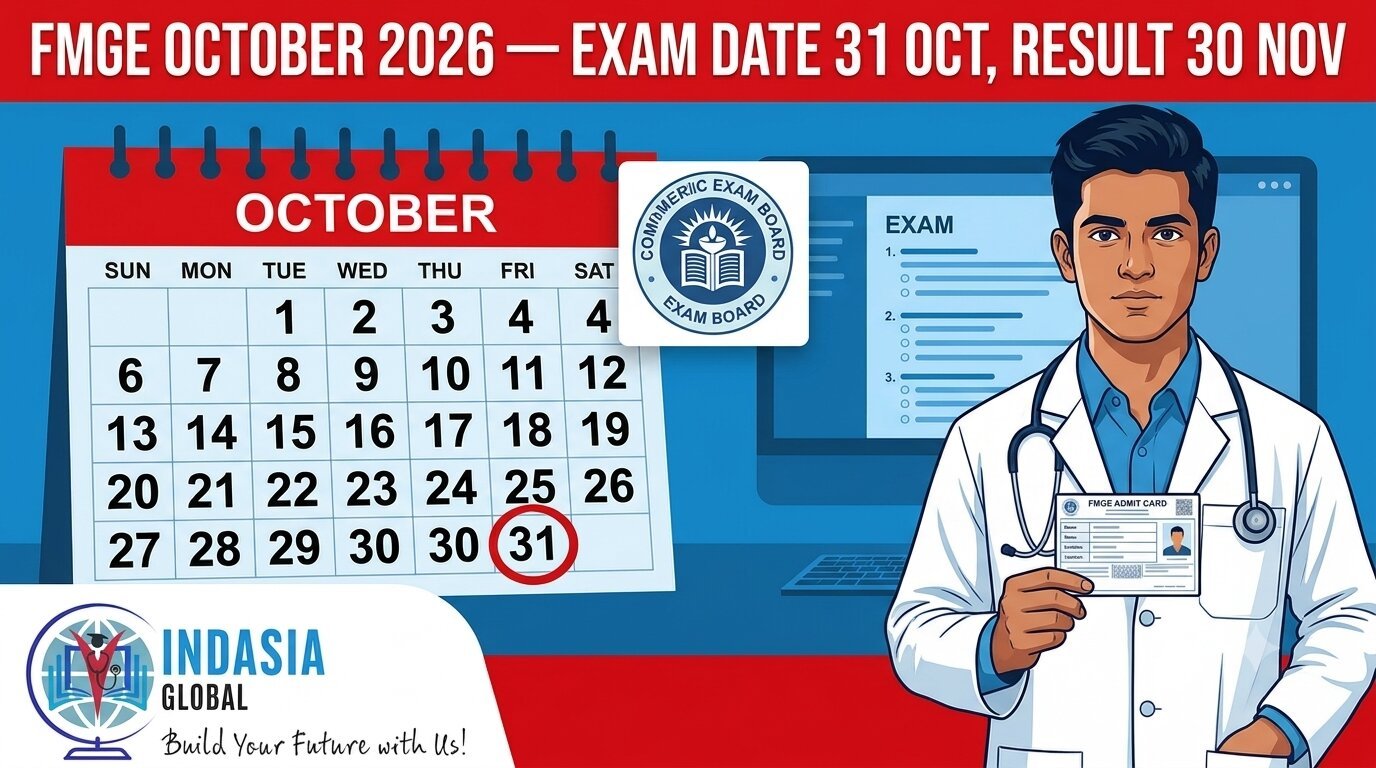
Specifically: NMC issued a formal warning against three Uzbekistan universities (Samarkand State Medical University, Bukhara State Medical Institute, and TSMU Termez Branch) in April 2026. Georgia’s state universities stopped admitting new foreign students from 2026-27. The English-medium instruction requirement has been actively enforced. The one-time permission for non-teaching hospital CRMI has not been extended beyond May 2026. An additional October 2026 FMGE session was added, making it three sessions per year.
What has NOT changed:
The core opportunity remains identical to what it was in 2022, 2023, 2024, and 2025. NMC-approved foreign universities in Kazakhstan, Russia, Georgia’s private universities, Philippines, and Kyrgyzstan remain fully valid. FMGE is still the licensing exam — NExT has been deferred with no implementation date confirmed. The cost gap between MBBS abroad and Indian private medical colleges has widened further. And the seat scarcity problem in India has not been solved by the 13,186 new seats added in 2026-27, since all new seats are in expensive private colleges.
The Five Things That Have Not Changed — And Never Will
1. The cost arithmetic still decisively favors MBBS abroad.
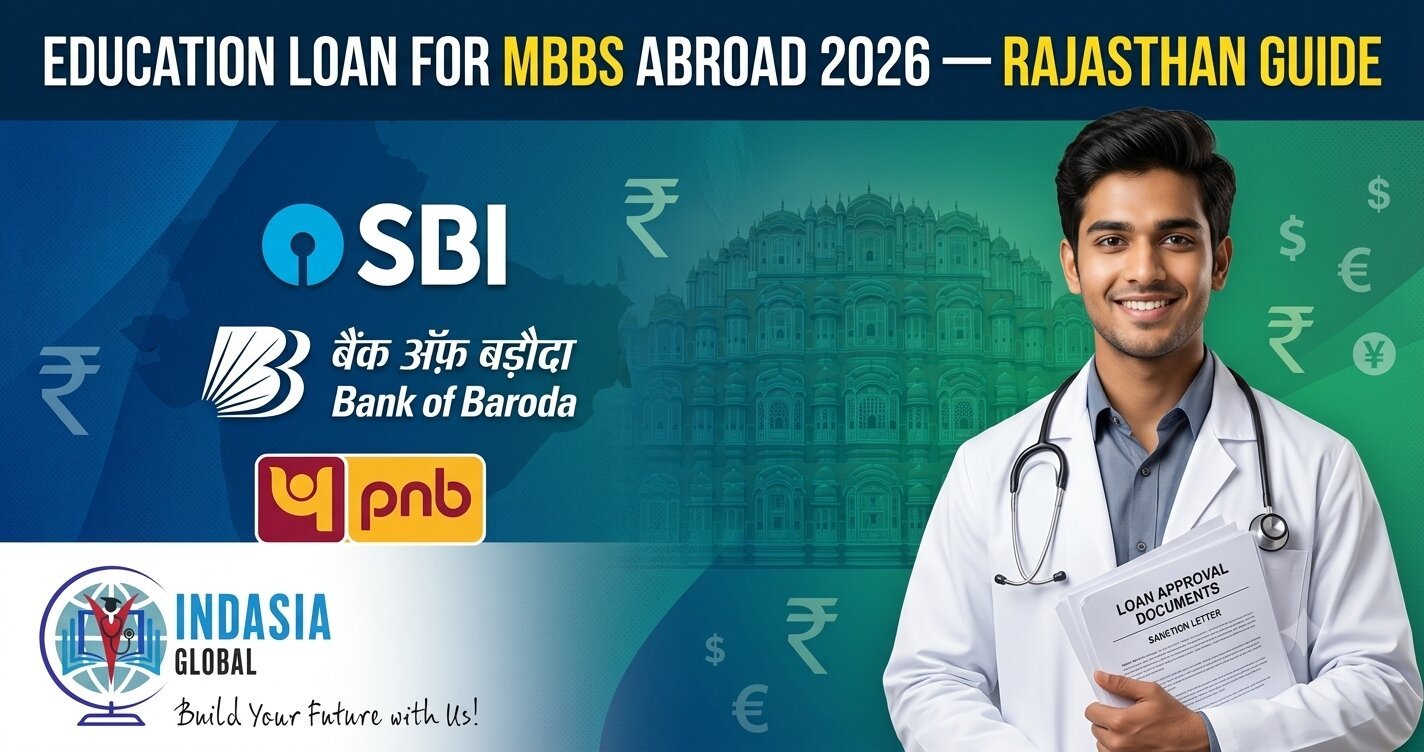
A Rajasthan student comparing MBBS options in October 2026 faces the same fundamental choice as in 2022: a Rajasthan private medical college at Rs 65 lakhs to Rs 1.2 crore, or MBBS in Kazakhstan at Rs 28 to 36 lakhs for the complete 6-year program including living expenses. The 2026 regulatory updates have not changed this Rs 30 to 80 lakh gap.
2. NEET seat scarcity in India has not been solved.
India now has 1,40,214 MBBS seats for approximately 25 lakh NEET candidates. 95 percent of candidates still do not get a seat anywhere. The new 13,186 seats added in 2026-27 are all in private colleges at unaffordable fees. The fundamental supply problem that drives students toward MBBS abroad is unchanged.
3. NMC-approved foreign universities remain fully valid.
The regulatory updates have not derecognized any major Kazakhstan, Russia, or Philippines university. The warnings have been specifically targeted at non-compliant institutions — primarily in Uzbekistan — that should never have been recommended in the first place. Students at KazNMU, Al-Farabi, Astana Medical University, Kazan Federal University, Bashkir State Medical University, Georgian American University, and BAU International University are unaffected.
4. FMGE outcomes at top universities continue to improve.
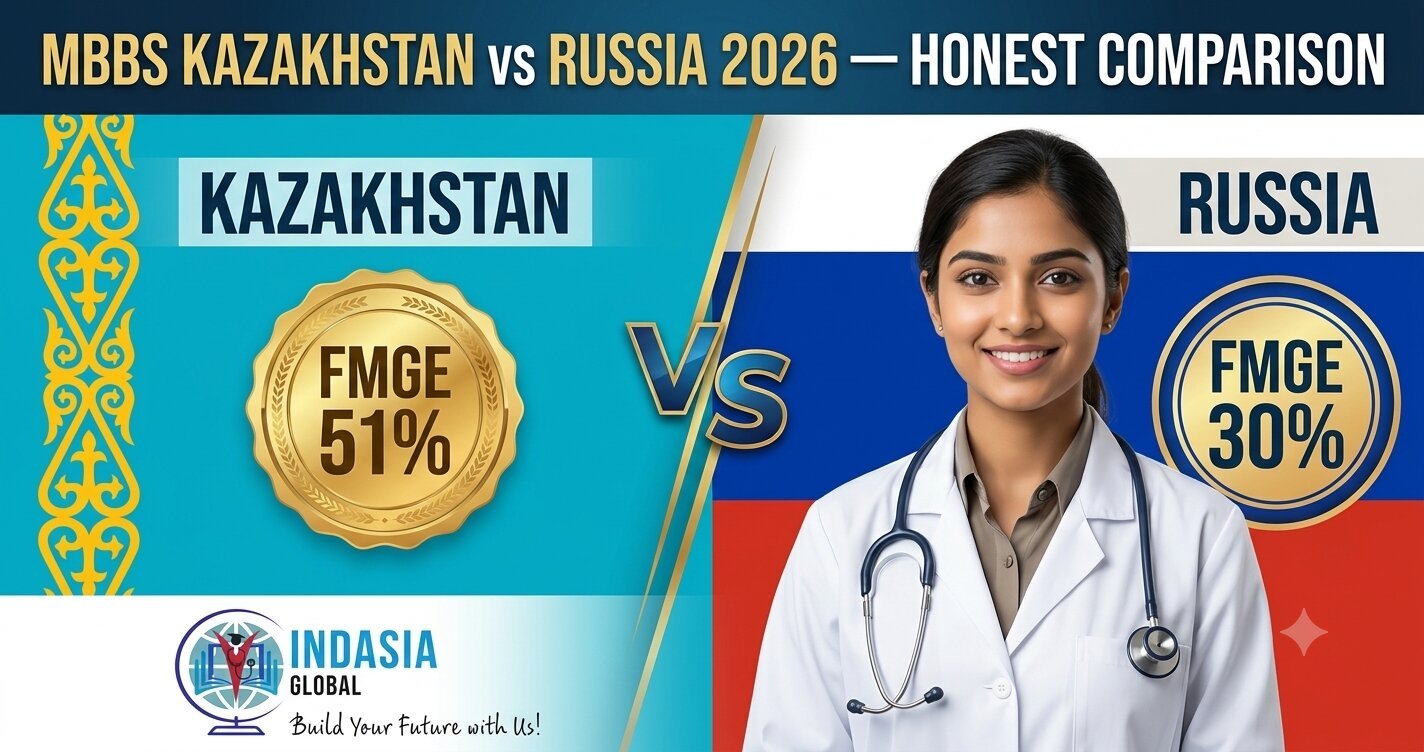
Al-Farabi Kazakh National University’s 51.08 percent FMGE pass rate in 2024 represents the highest recorded outcome for that university. Georgian American University’s 80.33 percent in 2024 was the highest recorded in Georgia’s history. The trend at top universities is positive, not negative.
5. The NExT timeline remains genuinely uncertain.
As of October 2026, FMGE is still the licensing exam for foreign medical graduates. NMC deferred NExT on 13 July 2023 until further directions from the Health Ministry. Treat any specific start year as a guess rather than a notified date. Students enrolling today should prepare for the licensing exam framework that applies at the time of their graduation in 2032 — which cannot be predicted with certainty in 2026.
What Has Changed — And Why It Actually Helps Students Who Choose Right
The 2026 regulatory tightening is, paradoxically, good news for students who choose NMC-compliant universities at established consultancies.
When NMC warns against specific Uzbekistan universities, it is removing the competitive clutter of non-compliant institutions that were previously masquerading as safe choices. Students who were comparing KazNMU with Samarkand State Medical University can now make that comparison more clearly — one is fully compliant, the other is flagged.
When Georgia’s state universities close to foreign students, families are redirected to Georgia’s private universities — which have historically had better FMGE outcomes than the state universities they were already preferring on outcomes data. The regulatory change reinforced the data-backed recommendation.
When NMC enforces the English-medium instruction requirement, it disadvantages Russian universities with bilingual programs and Kazakhstan universities that were not fully compliant — while universities that were already fully compliant (like KazNMU and Al-Farabi) gain a relative advantage.
The overall effect of 2026’s regulatory tightening is to reduce the universe of safe, compliant choices — which benefits families who work with consultancies that only recommend verified, compliant universities.
The Honest Assessment — When MBBS Abroad Makes Sense in 2026
MBBS abroad at an NMC-approved, FMGE-performing, English-medium university makes clear financial and career sense in 2026 for a specific student profile.
It makes sense if your NEET score qualifies you for MBBS abroad but does not secure a government seat in India. It makes sense if your family budget for medical education is under Rs 70 lakhs. It makes sense if you are willing to invest in genuine NExT or FMGE preparation during your clinical years to give yourself a realistic shot at clearing the licensing exam on the first or second attempt. And it makes sense if you choose a consultancy with genuine knowledge of and presence in the destination country — not just a desk in Jaipur.
It does not make sense at non-compliant or flagged universities regardless of how low their fees are. It does not make sense if you are going purely based on a consultant’s recommendation without independently verifying NMC compliance and FMGE data. And it does not make sense if you are expecting automatic recognition in India without any licensing exam requirement — that has never been the case and will not change.
What Indasia Global Recommends for October 2026 Admissions
The 2026-27 academic session intake window is closing in the coming weeks. Here is Indasia Global’s straightforward recommendation for Rajasthan families making a decision right now.
For families with a budget of Rs 28 to 36 lakhs who want the most predictable, supported path to MBBS abroad: KazNMU or Al-Farabi in Almaty, Kazakhstan. NMC-compliant. Above-average FMGE outcomes. Large Indian community. And Indasia Global’s resident team in Almaty — headed by Dr. Tara Chand Nehra who has been there since 1996 — providing the closest thing to a trusted guardian for your child in a foreign country.
For families with a budget of Rs 40 to 65 lakhs who prioritize the strongest FMGE outcomes globally: Georgian American University (80 percent FMGE 2024) or BAU International University (63 percent FMGE 2024) in Tbilisi.
For families with a tighter budget: Kyrgyzstan’s I.K. Akhunbaev Kyrgyz State Medical Academy (31.56 percent FMGE 2024) is the most reliable budget option. Uzbekistan requires very careful verification given the April 2026 advisory.
Frequently Asked Questions
1. Is MBBS abroad still valid in India after the 2026 NMC updates? Yes. MBBS from NMC-approved foreign universities is fully valid in India in 2026 — provided the degree meets FMGL Regulations 2021 requirements and the graduate clears FMGE or NExT. The 2026 updates have tightened compliance standards, not eliminated the pathway.
2. Has NMC stopped recognizing any major country for MBBS abroad in 2026? No. NMC has not derecognized any major country. Specific warnings have been issued against individual universities in Uzbekistan. All NMC-approved universities in Kazakhstan, Russia, Georgia (private), Philippines, and Kyrgyzstan remain valid.
3. Is FMGE being replaced by NExT in 2027? There is no confirmed date for NExT implementation. As of October 2026, FMGE remains the licensing exam for foreign medical graduates. NExT was deferred in July 2023 and no implementation date has been notified since.
4. Does NMC recognize MBBS degrees from online education programs? No. Online medical education alone is not accepted by NMC. In-person classes and clinical training are mandatory. Any program offering significant online MBBS content without equivalent in-person compensation is non-compliant.
5. Is the additional FMGE October 2026 session a sign that things are getting harder for foreign graduates? No — the opposite. NBEMS adding a third session means foreign graduates have more opportunities to clear the exam, reducing the career delay between attempts. It is a practical improvement for students.
6. How do I verify if my chosen university is currently NMC-compliant? Check nmc.org.in directly, cross-verify at wdoms.org, and check NMC’s recent advisories section. Any university not appearing on the current recognized list or appearing on an advisory should be rejected. Always verify independently rather than relying on consultancy documents.
Confused about whether MBBS abroad still makes sense after 2026 NMC updates? Contact Indasia Global for an honest, data-backed assessment at our Jaipur office. We only recommend Kazakhstan, Russia, Georgia, Philippines and Kyrgyzstan universities that are fully NMC-compliant and FMGE-data-backed.