
The Philippines has quietly become one of the most strategically sound MBBS abroad destinations for Indian students in 2026. While Kazakhstan and Russia attract more attention from Indian families, the Philippines offers something most alternatives cannot — a medical curriculum that is substantially aligned with the United States Medical Licensing Examination (USMLE) pattern, English as the sole medium of instruction from Day 1, and FMGE pass rates that rank among the highest for any non-South Asian country.
This guide covers verified data on fees, universities, FMGE outcomes, NMC compliance requirements, and everything Indian students and parents need to know before making a decision.
Why Philippines MBBS Is Underrated by Indian Families
Most Indian families default to Kazakhstan, Russia, or Georgia because those are the most marketed destinations. The Philippines receives less attention from consultants partly because the admission process is slightly more structured — it requires a pre-medical course called BS Biology or BS Biochemistry before the MBBS program itself, which adds time and planning.
However, the data makes a compelling case. The Philippines achieved an FMGE pass rate of 18.48 to 24 percent overall in 2024, with top universities performing significantly better — Southwestern University School of Medicine achieved 41.30 percent and Manila Central University achieved 56.25 percent. For Indian students targeting a strong licensing exam outcome, these numbers matter.
NMC Compliance Requirements — Important for Philippines
The Philippines follows a different medical education structure than India. Students here complete a 4.5-year Doctor of Medicine (MD) program, but NMC requires a minimum of 54 months of education for FMGE eligibility. Indian students should verify specifically that the university they are applying to meets the NMC’s FMGL Regulations 2021 requirements, including English-medium instruction, minimum course duration, and recognition by the Philippine Medical Association and WHO.
NEET qualification remains mandatory for all Indian students, as with every other country.
Top NMC-Compliant Universities in Philippines for Indian Students
University of Santo Tomas Faculty of Medicine and Surgery — One of Asia’s oldest and most prestigious medical schools, established in 1871. Strong clinical training and recognized globally.
Southwestern University PHINMA School of Medicine and Health Sciences — Recorded 41.30 percent FMGE pass rate in 2024, one of the strongest among Philippine universities for Indian students.
Manila Central University College of Medicine — Achieved 56.25 percent FMGE pass rate in 2024, making it among the best performers for Indian students in the country.
AMA School of Medicine — Well-known among Indian students, with a large student community and established Indian support infrastructure.
Davao Medical School Foundation — Located in Davao City, known for affordable fees and solid clinical training.
MBBS Fees in Philippines 2026 — Complete Cost Breakdown
Annual tuition fees at Philippine medical universities range from Rs 3 to 5 lakhs per year, depending on the institution. The total cost for the complete program — including pre-medical course, medical program, hostel, food, travel, and living expenses — typically comes to Rs 25 to 40 lakhs for the full duration.
Monthly living expenses in the Philippines are approximately Rs 12,000 to 18,000, covering accommodation, meals, and personal expenses. Metro Manila universities tend to be at the higher end of this range, while universities in Cebu, Davao, and other cities are more affordable.
Climate and Student Life in Philippines
The Philippines has a tropical climate with warm temperatures year-round, which most Indian students find comfortable. English is an official language and is spoken widely by the general population, making daily life and navigation significantly easier compared to countries where Russian or Kazakh is the primary language. The Filipino culture is warm and welcoming toward international students, and there is a growing Indian student community across major Philippine medical university cities.
Food options vary — Indian restaurants are available in major cities, though students in smaller towns may need to cook independently or rely on local food, which is generally mild and vegetarian-friendly options exist.
FMGE and Licensing Pathway for Philippines MBBS Graduates
Philippines-educated Indian medical students have shown improving FMGE outcomes in recent years. The key advantage is the English-medium curriculum — students do not switch between languages during their degree, and the clinical training follows international standards that align reasonably well with FMGE content.
Students entering in 2026 will likely face the NExT examination rather than FMGE by the time they graduate. NExT is expected to follow a similar syllabus but will also test clinical skills. Universities with strong hospital rotation programs will give students a meaningful advantage.
Admission Process for MBBS in Philippines 2026
The admission process for Philippines differs slightly from Central Asian countries. Here is the step-by-step process.
First, confirm your NEET score and obtain the NMC Eligibility Certificate before applying. Shortlist universities based on your budget and preferred city. Submit your application with NEET scorecard, Class 10 and 12 marksheets, and passport. If required, complete the university’s pre-medical screening process. Receive admission letter, apply for Philippines student visa, complete pre-departure documentation, and travel.
Universities in the Philippines typically have admission windows from January to August for the academic year starting August or September.
Eligibility Criteria for Indian Students
NEET qualification is mandatory. Minimum 50 percent aggregate in Physics, Chemistry, and Biology in Class 12 (45 percent for reserved categories). Minimum age of 17 years at the time of admission. Valid Indian passport with at least 18 months of validity.
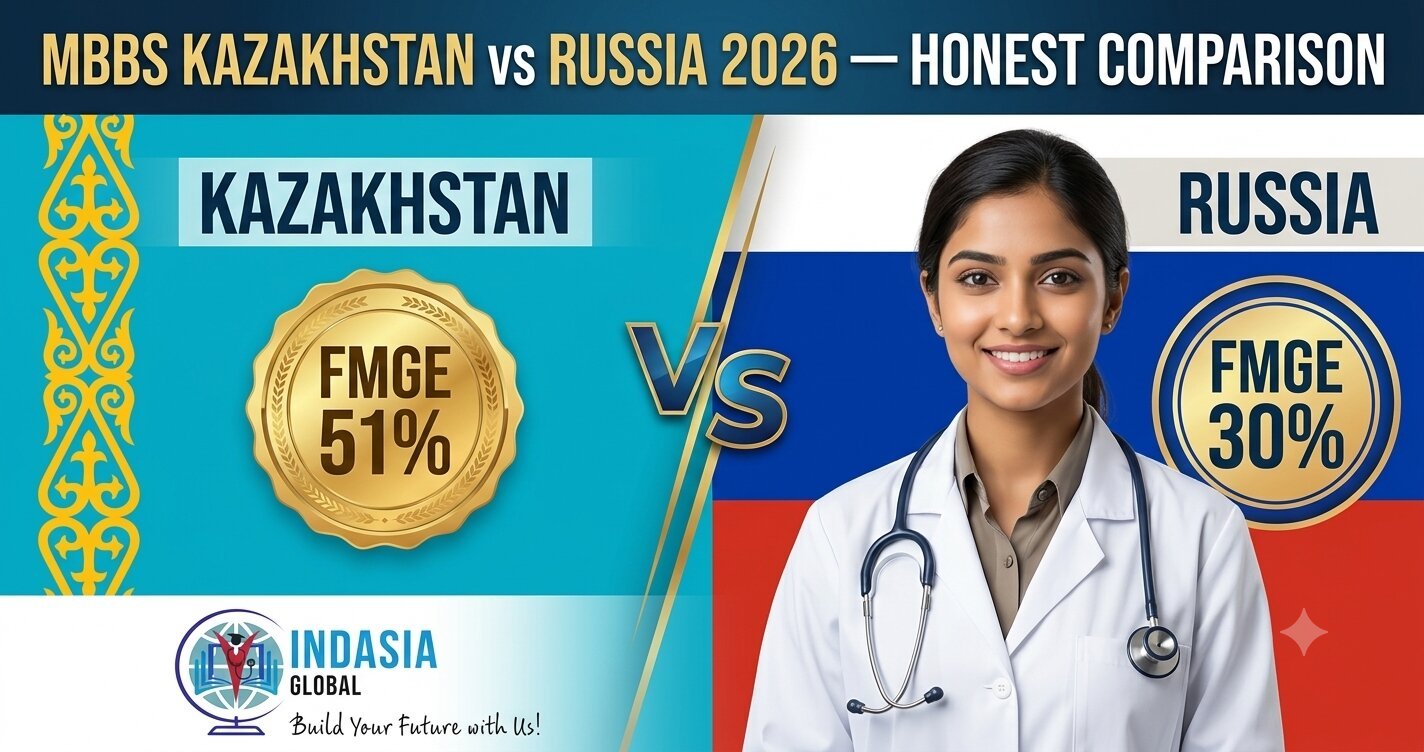
Philippines vs Kazakhstan — Which Should You Choose?
Choose Philippines if: You want an English-only clinical environment from Day 1, you are targeting a strong FMGE or NExT outcome, and you are comfortable with the pre-medical course structure.
Choose Kazakhstan if: You want a lower total cost, stronger on-ground Indian community support particularly in Almaty, and prefer the Central Asian MBBS structure which more closely mirrors the Indian timeline.
Both are strong options. The right choice depends on your NEET score range, family budget, and long-term career plans.
Frequently Asked Questions
1. Is MBBS from Philippines valid in India? Yes, provided the university is NMC-compliant — meaning it meets the FMGL Regulations 2021 requirements including English-medium instruction, minimum course duration, and WHO recognition. Students must clear NExT after returning to practice in India.
2. How long does MBBS take in Philippines for Indian students? The complete pathway typically takes 5.5 to 6 years including the pre-medical program. Students should verify the exact duration with their chosen university.
3. Is NEET required for MBBS in Philippines? Yes. NEET is mandatory for all Indian students intending to practice medicine in India after completing MBBS abroad, including in the Philippines.
4. What is the FMGE pass rate for Philippines MBBS? The overall pass rate for Philippines graduates in FMGE 2024 was 18.48 to 24 percent, but top universities like Manila Central University achieved 56.25 percent and Southwestern University achieved 41.30 percent. University selection significantly determines outcomes.
5. Is English the medium of instruction throughout the MBBS program in Philippines? Yes. English is the official medium of instruction in all accredited Philippine medical universities, from the pre-medical program through all clinical years. This is a significant advantage for FMGE and NExT preparation.
6. What is the cost of living in Philippines for Indian students? Monthly living expenses are approximately Rs 12,000 to 18,000 per month, covering accommodation, food, and personal expenses. Metro Manila is on the higher end and smaller cities are more affordable.
For personalized guidance on MBBS in Philippines, including university selection based on your NEET score and budget, contact Indasia Global for free counselling. Our team can help you compare Philippines with Kazakhstan, Russia, and Georgia based on your specific profile.