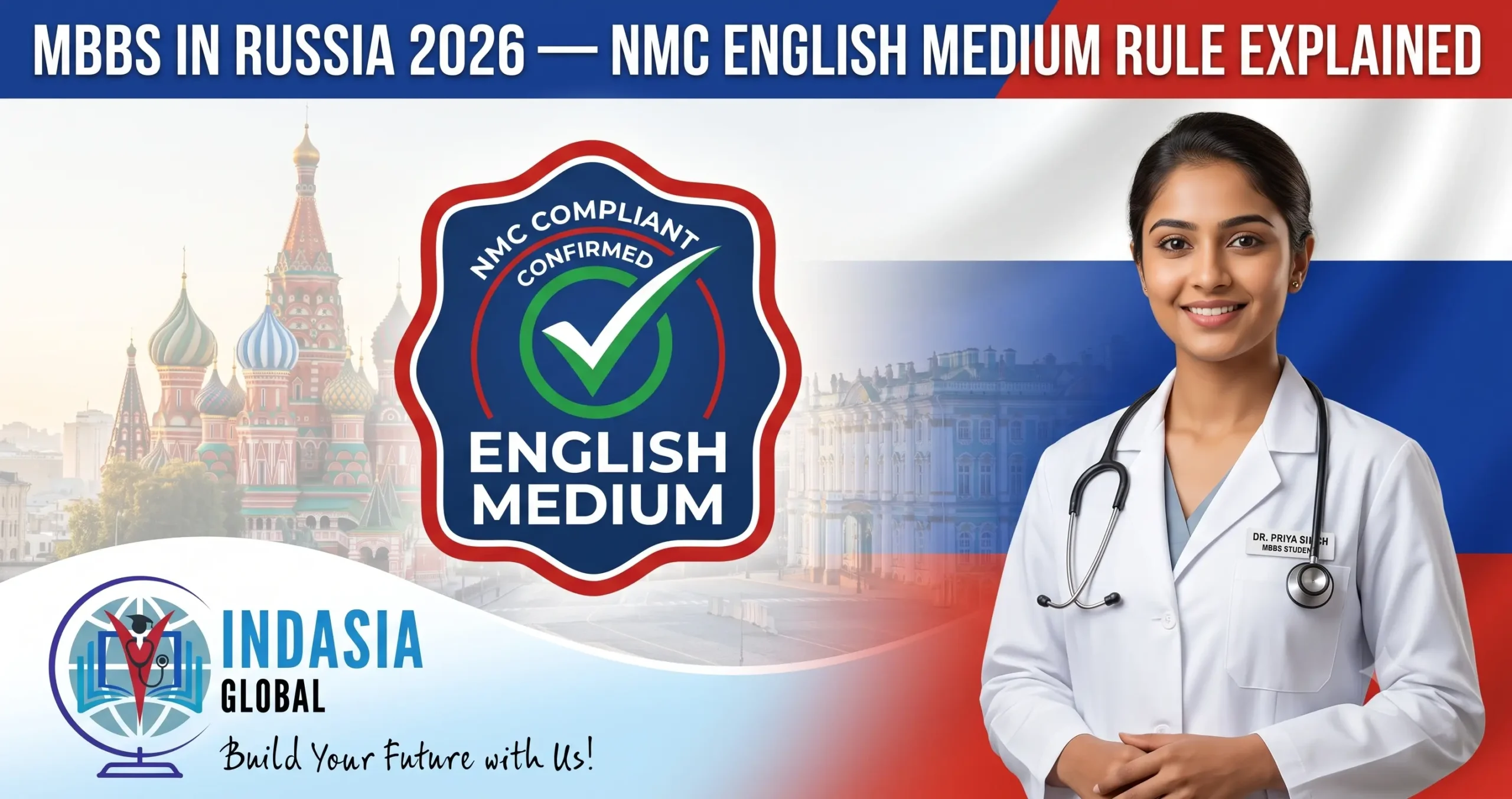
Russia has been one of the most popular MBBS abroad destinations for Indian students for over four decades. But 2026 has brought a regulatory change that every family considering Russia must understand before making any decision — the NMC’s English-medium instruction requirement under the FMGL Regulations 2021 is now being actively enforced, and it has changed which Russian universities are genuinely safe choices for Indian students.
The April 2026 NMC Clarification — What Changed
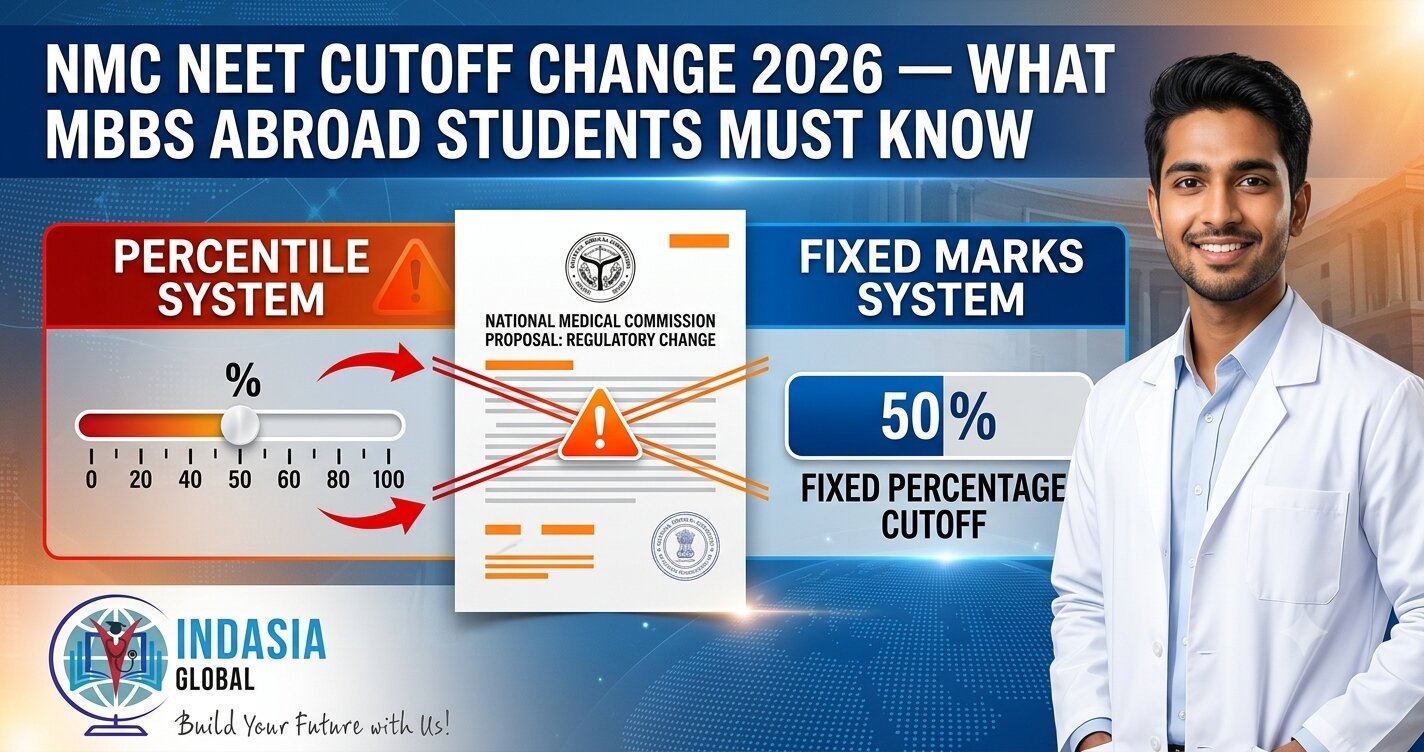
The National Medical Commission issued a fresh advisory in April 2026 reiterating that only universities providing MBBS education exclusively in English qualify for FMGE and NExT eligibility for Indian students. This has been in the regulations since 2021, but enforcement and awareness have been inconsistent.
The practical consequence: Russian universities that offer bilingual programs — Russian and English combined — where clinical years involve significant Russian-language instruction are at risk of producing graduates who cannot sit for NExT. This has always been a grey area. Post-April 2026, it is no longer grey.
Indian students who enroll in Russian universities where the program transitions substantially to Russian in clinical years are taking a calculable risk with their career. The NMC will evaluate the medium of instruction at the time of Eligibility Certificate issuance for the next batch of returning graduates.
Which Russian Universities Have Fully English-Medium Programs
The following universities are consistently cited as having English-medium programs for international students throughout the six-year course — meaning theoretical and clinical years are both conducted primarily in English:
Kazan Federal University is one of Russia’s top ranked universities and maintains a fully English-medium track for international medical students. FMGE pass rate has been consistently above the Russia national average.
Bashkir State Medical University in Ufa offers English-medium instruction throughout and has a large, established Indian student community with Indian food facilities available.
Crimea Federal University, despite geopolitical complexity around Crimea’s status, continues to enroll Indian students and maintains English-medium instruction. However, families should verify current NMC listing status independently given the changing political landscape.
Novosibirsk State Medical University provides English-medium instruction for international students and has a growing Indian enrollment.
Perm State Medical University, Rostov State Medical University, and Volgograd State Medical University are additional options with English-medium tracks that have established track records for Indian students.
Russian Universities to Approach With Caution in 2026
Families should ask very specific questions before enrolling in any Russian university: Is the entire 6-year program, including clinical rotations, conducted in English? Are clinical year instructors English-proficient? Are patient interactions during clinical training conducted in a way that does not require Russian-language skills to participate?
Universities that answer vaguely, or that describe their program as “English and Russian combined” or “English with Russian for patient interactions,” are describing a bilingual program that may not meet NMC’s full English-medium requirement. Ask for this confirmation in writing.
MBBS in Russia — Verified Cost Data 2026
Annual tuition at NMC-approved Russian universities with English-medium programs ranges from approximately Rs 2.5 to 5 lakhs per year depending on the institution and city. Moscow and St. Petersburg-based universities tend to be at the higher end, while universities in Siberian and Ural cities like Novosibirsk, Ufa, and Perm tend to be more affordable.
Cost of living in Russia varies significantly by city. Moscow and St. Petersburg cost Rs 20,000 to 30,000 per month including accommodation and food. Smaller Russian cities like Ufa, Perm, and Novosibirsk cost Rs 12,000 to 18,000 per month.
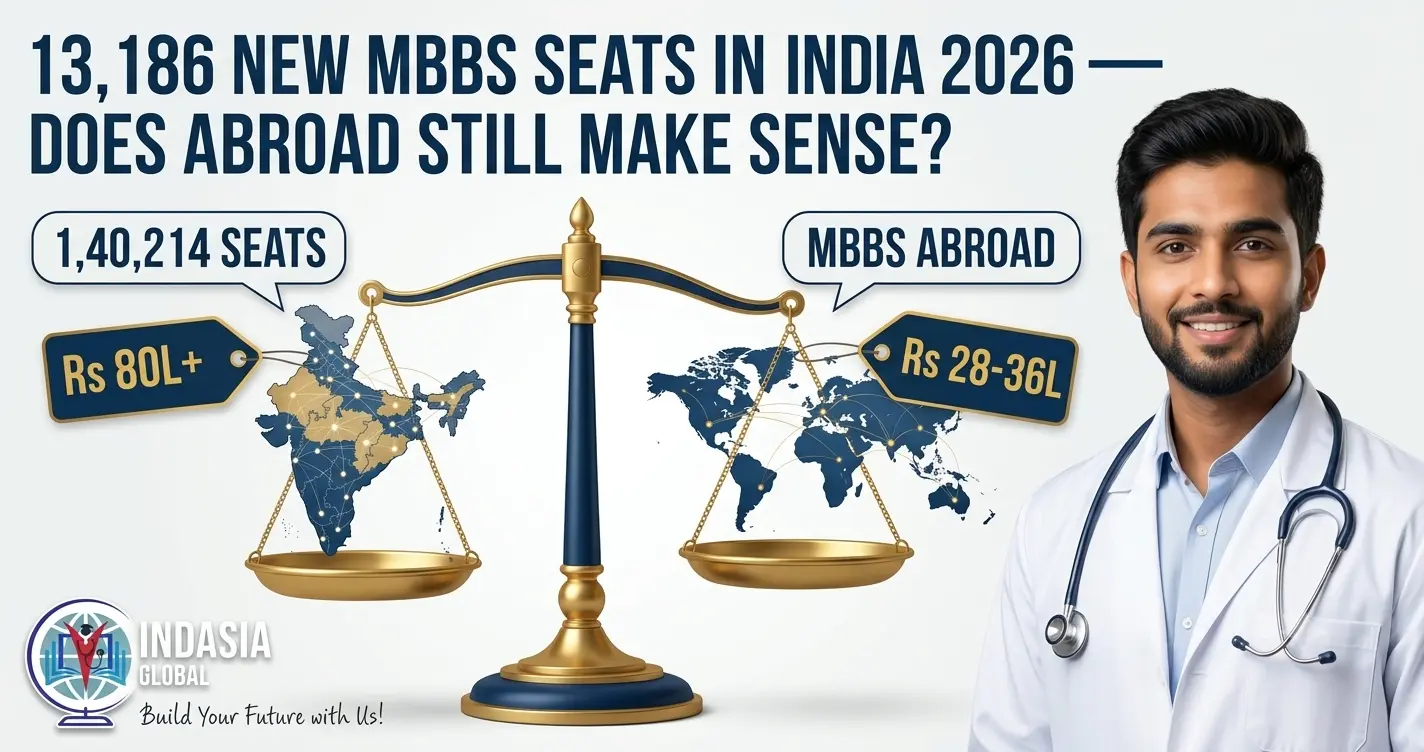
Total 6-year cost for MBBS in Russia including tuition, hostel, food, travel, and living expenses is approximately Rs 30 to 48 lakhs depending on university and city. This remains competitive with Kazakhstan and significantly below Rajasthan private medical colleges.
FMGE and NExT Performance — Russia 2024 Data
Russia’s country-wide FMGE pass rate in 2024 was approximately 29 to 30 percent — solidly above the global average of 20 to 23 percent for all foreign medical graduates. However, there is significant variation between universities. The Russian universities with consistently higher-than-national-average pass rates are Kazan Federal University, Bashkir State Medical University, and Rostov State Medical University.
Practical Reality for Indian Students in Russia 2026
India-Russia relations remain warm, and Russia continues to welcome Indian students. The rupee payment option — paying fees in INR rather than USD — is available through selected universities and reduces currency exchange risk for Indian families.
The Indian community in Russia is large and well-established, particularly in Kazan, Ufa, Novosibirsk, and Krasnodar. Indian food options, cultural organizations, and peer networks exist at most major medical university cities.
Winters in Russia are significantly colder than in Kazakhstan or Georgia. Students at Siberian city universities should be prepared for temperatures reaching minus 20 to minus 30 degrees Celsius in January and February. Proper preparation and appropriate clothing budgets should be factored in.
Frequently Asked Questions
1. Is MBBS in Russia still a good option for Indian students after the April 2026 NMC clarification? Yes, provided the university has a fully English-medium program throughout all 6 years. Universities like Kazan Federal University, Bashkir State Medical University, and Rostov State Medical University meet this standard. The key is asking the right verification questions before enrolling.
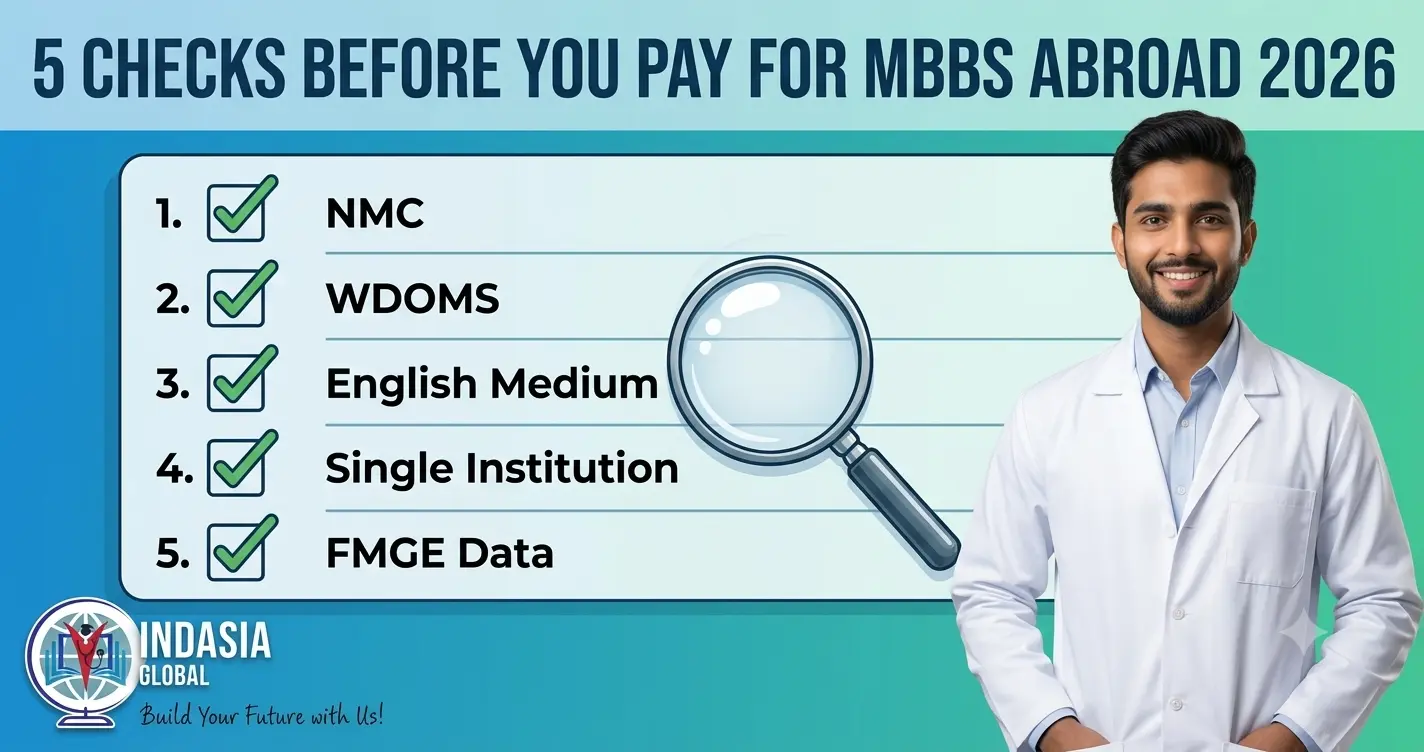
2. How do I verify that a Russian university is fully English medium? Ask the university directly for a written confirmation that both theoretical and clinical year instruction is conducted in English. Also verify the university’s current NMC status at nmc.org.in and its listing in WDOMS.
3. What is the FMGE pass rate for Russia-educated Indian students? Russia’s national average was approximately 29 to 30 percent in FMGE 2024. Top performing universities like Kazan consistently deliver above this average.
4. Can Indian students pay fees in rupees for Russian universities? Some Russian universities offer INR payment options, which eliminates the currency exchange risk of paying in USD or Rubles. Confirm this option specifically with the university before enrollment.
5. Is MBBS in Russia cheaper than Kazakhstan? Comparable. Russia offers a similar cost range of Rs 30 to 48 lakhs total over 6 years, though the range is wider — Moscow universities can be significantly more expensive than Siberian city universities. Kazakhstan’s range of Rs 28 to 36 lakhs is narrower and more predictable.
6. Does Indasia Global facilitate MBBS admissions in Russia? Yes. Indasia Global provides guidance for Russia, Kazakhstan, Georgia, and other countries. For Russia, we specifically advise on universities with confirmed English-medium programs and verified NMC compliance.
Planning MBBS in Russia in 2026 and need clarity on the NMC English-medium rule? Contact Indasia Global for verified, honest guidance from our Jaipur office. We also guide students toward MBBS in Kazakhstan, Georgia, Uzbekistan and Kyrgyzstan.