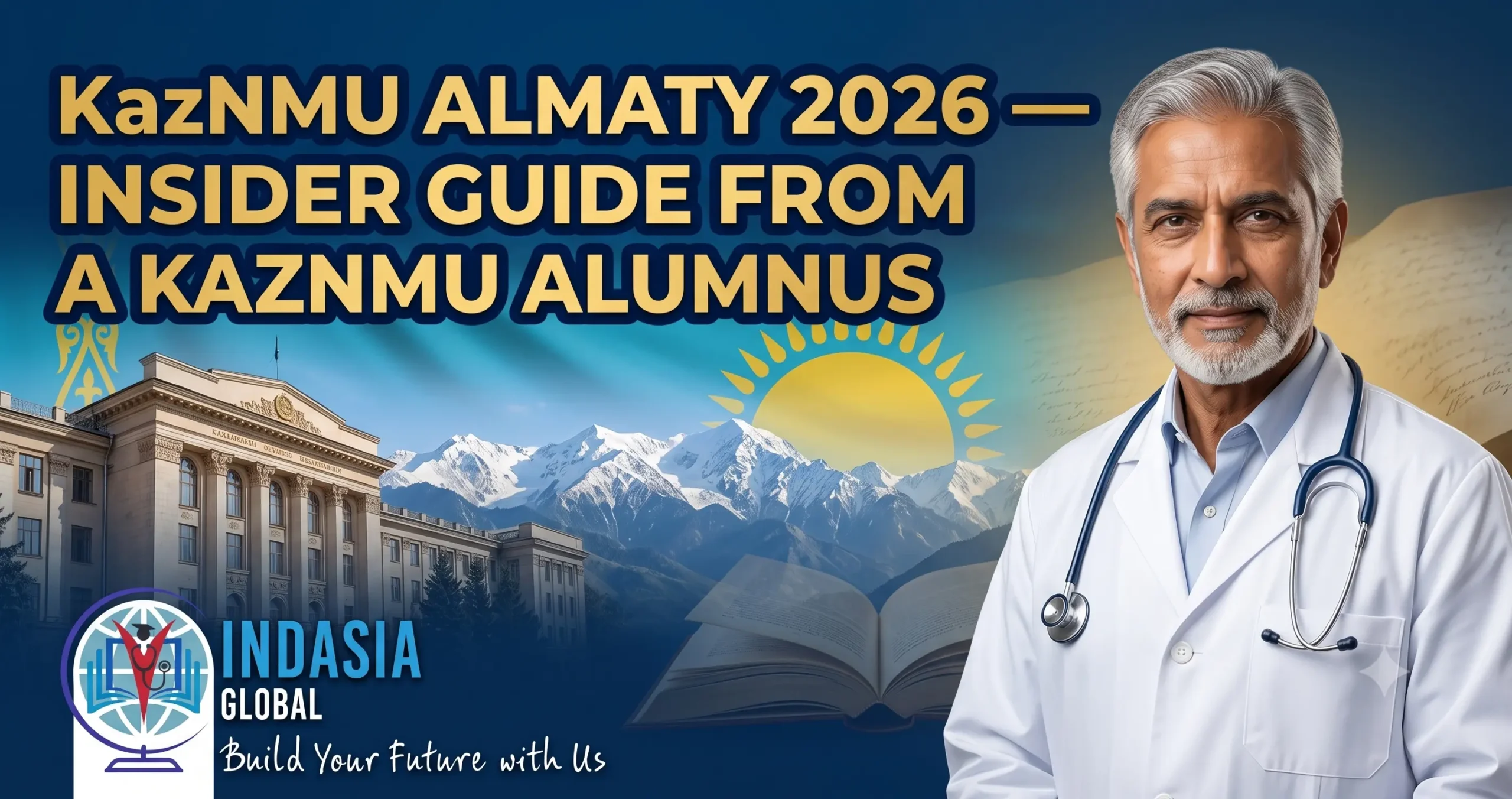
Most guides about KazNMU are written by consultants sitting in India who have never set foot in Almaty. This one is different. Dr. Tara Chand Nehra — who heads Indasia Global’s resident team in Almaty, Kazakhstan — is himself a KazNMU alumnus. He completed his MD at Kazakh National Medical University and has lived in Almaty since 1996. What follows is not a brochure — it is insider perspective from someone who studied there, watched it develop over three decades, and has been guiding Indian students through KazNMU since before most current applicants were born.
KazNMU — What the Official Facts Say
Kazakh National Medical University, officially known as Asfendiyarov Kazakh National Medical University and abbreviated as KazNMU, was established in 1930. It is the oldest medical university in Central Asia. Over 90 years of continuous medical education, more than 50,000 doctors trained, and a faculty of over 1,500 — these are the headline numbers.
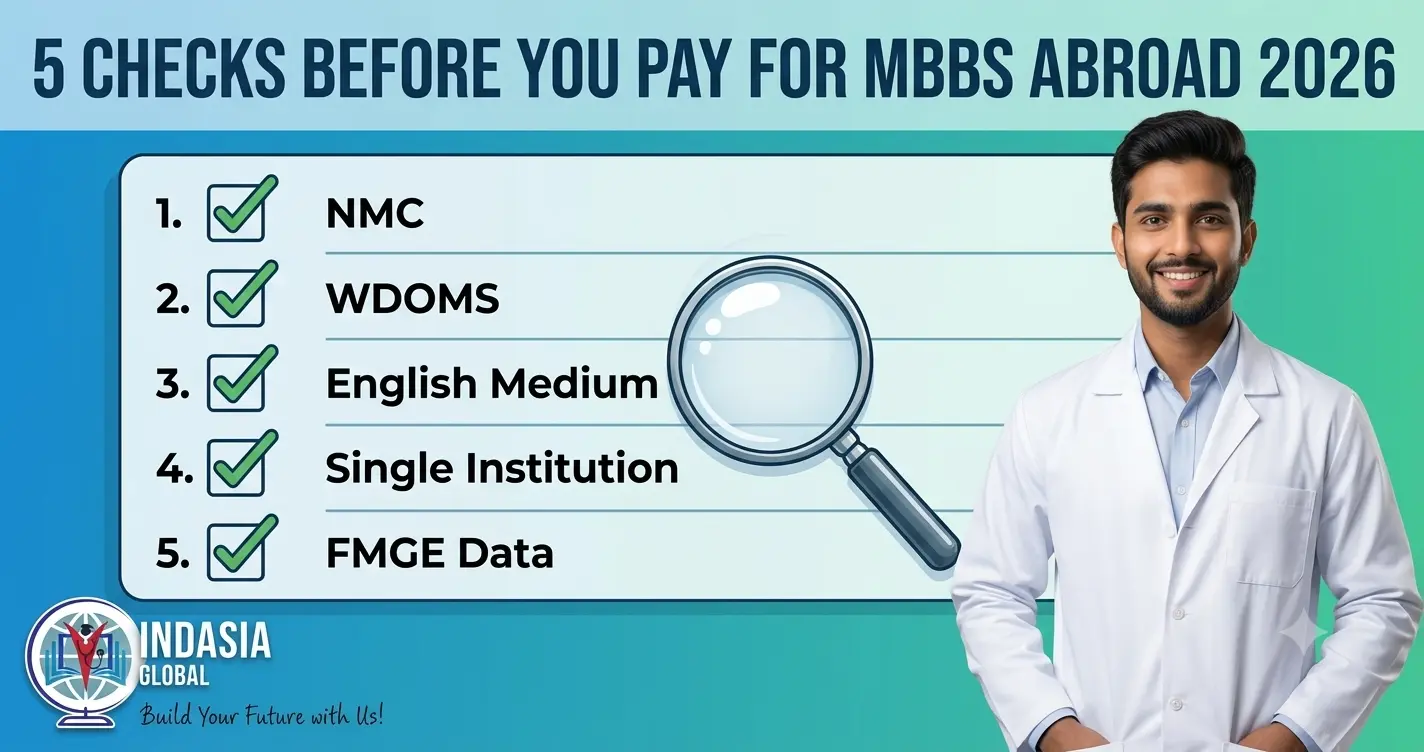
NMC recognition: Confirmed. WHO listing: Confirmed. WDOMS registration: Confirmed. Medium of instruction for international students: English throughout all 6 years of the program. These are the minimum requirements families should verify for any MBBS abroad university, and KazNMU meets all of them without exception.
KazNMU FMGE Results — The Honest Data
KazNMU’s FMGE pass rate data needs to be read at university level, not country level. Kazakhstan’s national average is approximately 25 percent. KazNMU’s alumni consistently perform above this national average, reflecting the university’s emphasis on clinical training and exam-oriented curriculum structure.
The university has trained more Indian doctors than any other institution in Kazakhstan, which means its FMGE sample size is also the largest. Its consistent above-average performance across thousands of alumni over many years is a more reliable signal than one-year data from smaller universities.
KazNMU Fees 2026-27 — Complete Verified Breakdown
Annual tuition at KazNMU for international students in the English-medium program is approximately Rs 3.5 to 5 lakhs per year. Fees are payable in USD and the exchange rate variation should be factored into budgeting.
Hostel accommodation on or near the KazNMU campus costs approximately Rs 60,000 to 1 lakh per year depending on room type. Single rooms cost more than double rooms. Most students in their first two years choose double rooms for the peer support benefit.
Food at Indian mess facilities near the KazNMU campus is approximately Rs 50,000 to 80,000 per year. Almaty has several Indian mess options that have developed specifically to serve the Indian student community over decades. Students in later years sometimes transition to cooking in hostel kitchens, which reduces food costs further.
Travel from India to Almaty — typically through Delhi with a direct or one-stop flight — costs approximately Rs 30,000 to 50,000 one way. Most students visit India once a year during the summer break.
Visa and documentation costs as a one-time expense are approximately Rs 20,000 to 30,000.
Miscellaneous personal expenses — clothing, phone, internet, outings, emergencies — are approximately Rs 20,000 to 30,000 per year.
Total 6-year cost for KazNMU including all the above: approximately Rs 30 to 38 lakhs.
What the Campus and Hospital Infrastructure Actually Look Like
KazNMU’s main campus is located in central Almaty, with additional buildings across the city. The university owns and operates three teaching hospitals directly attached to the institution — this is the critical infrastructure advantage that separates KazNMU from universities that use only affiliated hospitals.
Direct hospital ownership means students have predictable, structured clinical access from Year 3 onward. Rotation schedules are controlled by the university, not negotiated with a separate hospital administration. When Dr. Nehra studied at KazNMU in the 1990s, the hospital infrastructure was good. Today it is significantly better — the university has invested substantially in upgrading its clinical facilities over the past decade.
Indian Student Life in Almaty — What Dr. Nehra Tells Families
Every family visiting Indasia Global’s Jaipur office asks the same question: what will daily life actually be like for my child in Almaty? Here is what Dr. Nehra, who has observed the Indian student community in Almaty for nearly 30 years, tells them.
Almaty is Kazakhstan’s largest city — 2 million people, well-developed infrastructure, safe by international standards and consistently safe for Indian students specifically. Crime targeting international students is rare. The city has reliable public transport, consistent electricity and heating, and a functional healthcare system for the students themselves.
The Indian student community in Almaty is large, long-established, and well-organized. There are Indian cultural festivals, cricket tournaments, religious celebrations, and a genuine social infrastructure that makes the transition from Rajasthan or any other Indian state manageable. Students find familiar food, familiar faces, and familiar cultural touchpoints within weeks of arriving.
Indian mess facilities in Almaty have been serving KazNMU students for over 20 years. Both vegetarian and non-vegetarian options are available. Students who miss home cooking can find the basics — dal, roti, sabzi, rice — within a few hundred meters of the campus.
Winters in Almaty are cold — temperatures drop to minus 10 to minus 15 degrees Celsius in January and February. This is colder than India but significantly milder than Russian cities like Novosibirsk or Perm. Proper winter clothing, which can be purchased locally at reasonable cost, is sufficient. Students adapt within the first winter.
Why Dr. Nehra Specifically Recommends KazNMU Over Other Kazakhstan Options
Dr. Tara Chand Nehra graduated from KazNMU. He knows the faculty, the clinical training system, and the student experience from the inside. When a family comes to Indasia Global’s Jaipur office asking which Kazakhstan university to choose, Dr. Nehra’s recommendation is consistent: KazNMU for students who prioritize clinical training infrastructure and established Indian community support; Al-Farabi for students whose primary criterion is FMGE pass rate and who have a slightly higher budget.
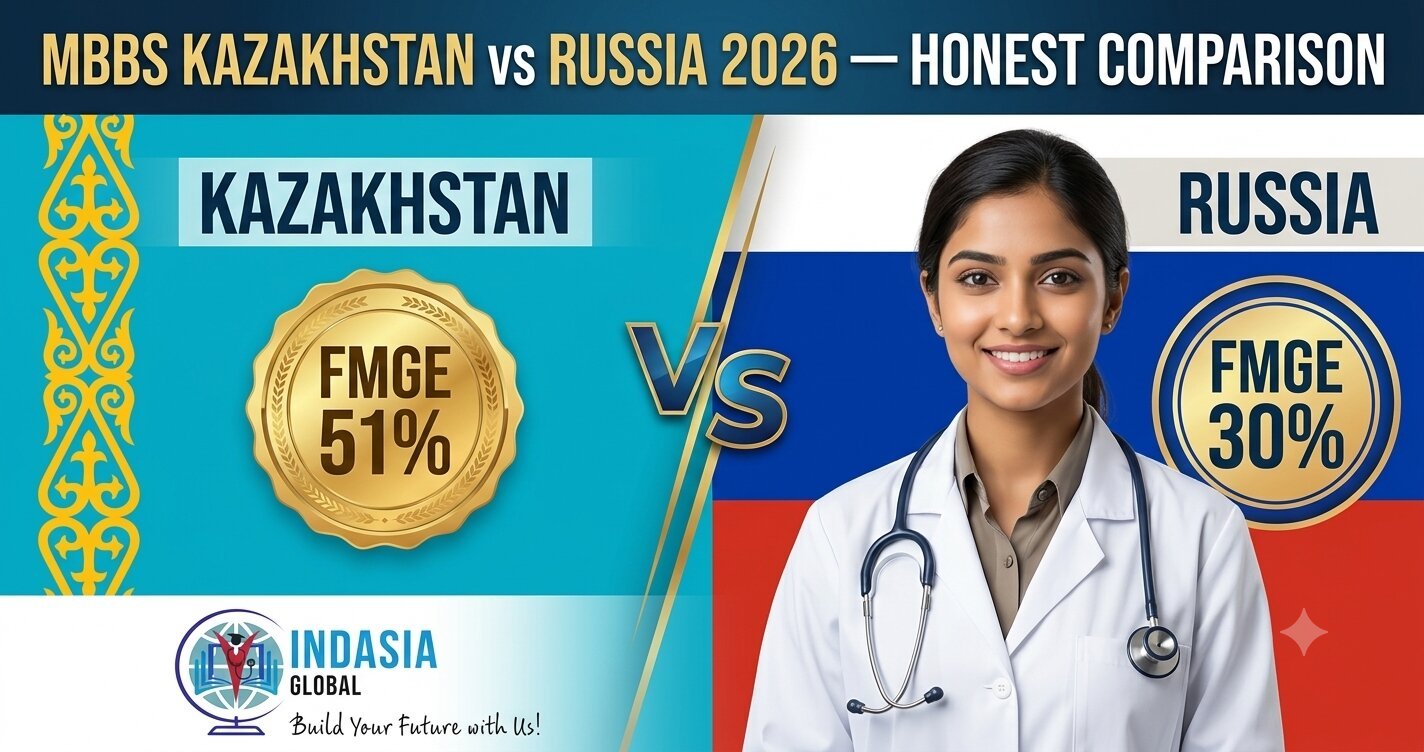
Both are strong choices. The difference is emphasis. KazNMU’s 90-year medical-only history and directly owned hospitals represent a clinical training environment that has produced tens of thousands of practicing doctors. Al-Farabi’s QS ranking and 51 percent FMGE outcome represent the best licensing exam data point in Kazakhstan.
Frequently Asked Questions
1. What is KazNMU’s FMGE pass rate in 2024? KazNMU alumni consistently perform above Kazakhstan’s national average of approximately 25 percent. The exact university-specific figure varies year to year. Ask Indasia Global’s Almaty team for the most current data, which is updated annually.
2. Is KazNMU better than Al-Farabi for Indian students? Depends on priority. KazNMU has better clinical infrastructure through its owned hospitals and a larger Indian community. Al-Farabi has a higher FMGE pass rate at 51 percent and a QS global ranking of 163rd. Both are strong, NMC-compliant choices. Indasia Global can help you decide based on your specific profile and priorities.
3. What is the total cost for MBBS at KazNMU for 6 years? Approximately Rs 30 to 38 lakhs including tuition, hostel, food, travel, and all living expenses for the complete 6-year program.
4. Is there an Indian mess at KazNMU? Yes. Multiple Indian mess facilities have served the KazNMU Indian student community for over 20 years. Both vegetarian and non-vegetarian options are available. The Indian food infrastructure in Almaty is one of the most developed of any MBBS abroad destination.
5. What language is used for clinical training at KazNMU? KazNMU’s international program is conducted in English throughout all 6 years, including clinical rotations. Patient interactions during clinicals may involve a mix of Kazakh and Russian, but teaching, case presentations, and assessments are conducted in English.
6. What is Indasia Global’s specific advantage for KazNMU admissions? Our resident team in Almaty is headed by Dr. Tara Chand Nehra — a KazNMU alumnus himself. He coordinates directly with the university’s admissions office, knows the faculty and administrative processes personally, and provides on-ground support for every student from arrival through graduation. This is a structural advantage that no other Jaipur-based consultancy can offer for KazNMU specifically.
Planning MBBS at KazNMU Almaty for 2026? Contact Indasia Global for guidance from people who actually know the university from the inside. Free counselling at our Jaipur office — or speak directly with our resident team in Almaty.