
If you or your child was planning MBBS in Georgia for the 2026-27 academic session, you have likely come across alarming headlines about a ban on foreign students. This guide cuts through the confusion and gives you the complete, verified picture — what exactly changed, what did not change, which universities are still fully open for Indian students, and what this means if you are consulting with an MBBS abroad consultant in Jaipur right now.
What Actually Happened — The Verified Facts
In December 2025, Georgia’s Minister of Education, Givi Mikanadze, made an official announcement that state-funded universities in Georgia would stop admitting new foreign students starting from the 2026-27 academic year. This was confirmed across Georgian official media including Rustavi 2 and independently reported by University World News.
The four state universities that are now closed to new international MBBS admissions are Tbilisi State Medical University (TSMU), Batumi Shota Rustaveli State University, Ivane Javakhishvili Tbilisi State University, and Akaki Tsereteli State University.
This is a real policy change. It is not a rumour. However, it is also not the end of MBBS in Georgia — it is a redirection.
What Has NOT Changed
Students already enrolled in Georgia’s state universities are not affected. They continue their programs without interruption. The ban applies only to new admissions from the 2026-27 academic session onward.
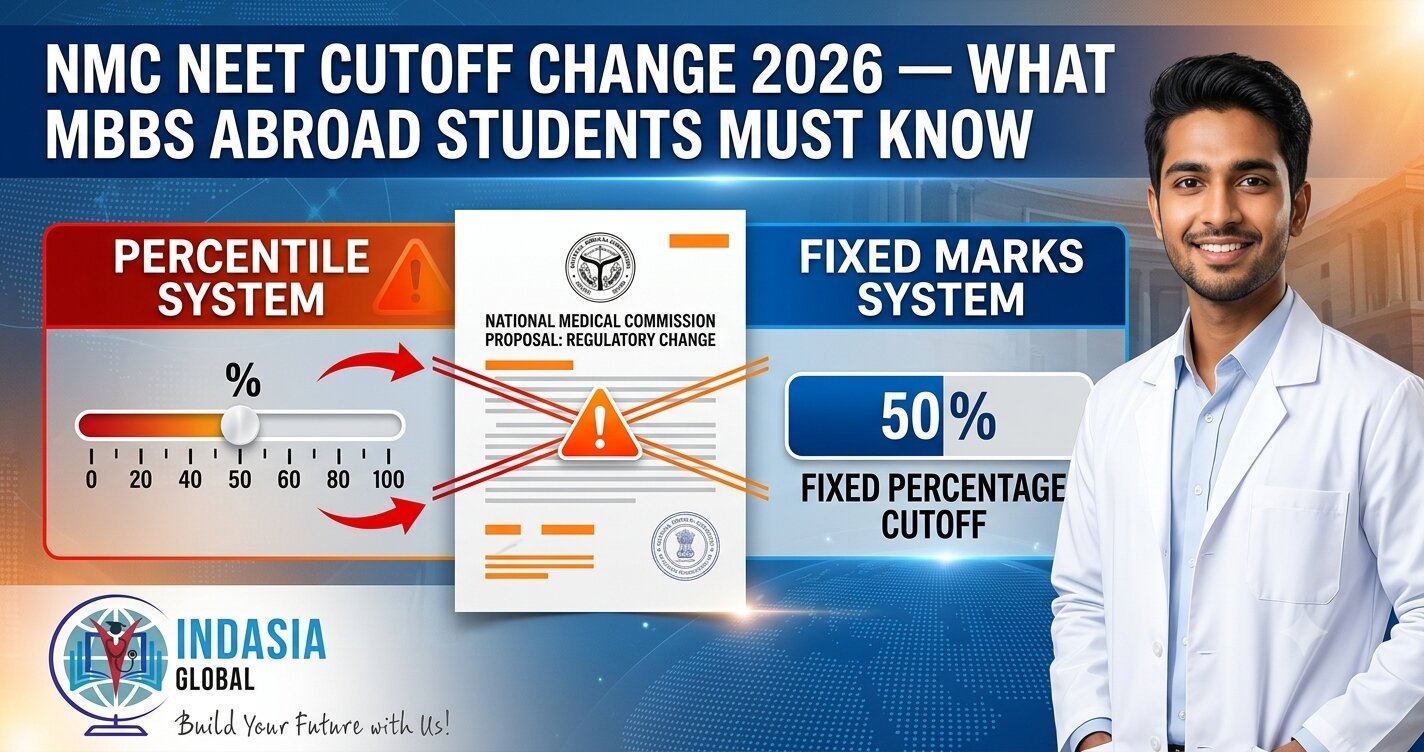
All of Georgia’s private medical universities that are NMC-approved remain fully open to Indian students. NEET qualification remains mandatory for all Indian students, as per NMC’s FMGL Regulations 2021. Georgian private university degrees continue to be recognized by NMC, WHO, and listed in WDOMS, making graduates eligible for FMGE and NExT in India.
Why Did Georgia Make This Change?
The Georgian government’s stated reason is a Citizen-First academic model. The government wants to concentrate public funding on serving Georgian citizens and align state universities with national labor market needs. By restricting foreign enrollment in state institutions, the policy frees up seats and resources for domestic students. This is a broader higher education reform — it is not specifically targeted at Indian students, nor is it a reaction to any particular incident.
The Silver Lining Nobody Is Telling You
Here is what most blogs covering this news have missed: the state university ban may actually benefit Indian students who study this data carefully.
Georgia’s three best-performing universities for FMGE outcomes in 2024 — Georgian American University at 80.33 percent, BAU International University at 63.29 percent, and SEU at 60.39 percent — are all private universities. Tbilisi State Medical University, which is now closed to new foreign students, had a lower FMGE pass rate than these three private institutions.
In other words, the universities that are now closed were not the ones producing the best FMGE outcomes for Indian students. The ban has effectively pushed Indian students toward the universities that were already delivering superior licensing exam results.
Which NMC-Approved Private Universities in Georgia Are Open for 2026-27?
The following private medical universities in Georgia are NMC-approved, WDOMS-listed, and open for new international admissions in 2026-27:
Georgian American University (GAU) in Tbilisi recorded the highest FMGE pass rate of any Georgia university in 2024 at 80.33 percent. This is also among the highest recorded by any MBBS abroad institution globally in that year. Annual fees are approximately Rs 3.5 to 4.5 lakhs.
BAU International University in Tbilisi recorded 63.29 percent FMGE pass rate in 2024. BAU is known for its modern hospital infrastructure and strong clinical training program. Annual fees are approximately Rs 3.5 to 5 lakhs.
East European University in Tbilisi recorded 22.95 percent FMGE pass rate in 2024. Established in 2012 and recognized by NMC and WHO. Annual fees approximately Rs 3.5 to 4.5 lakhs.
Caucasus International University in Tbilisi recorded 33.02 percent FMGE pass rate in 2024. NMC-approved with a well-established Indian student community. Annual fees approximately Rs 3 to 4 lakhs.
New Vision University in Tbilisi is a newer institution with NMC recognition and growing enrollment among Indian students. Annual fees approximately Rs 3 to 4 lakhs.
David Tvildiani Medical University (DTMU) in Tbilisi is among the longer-established private medical universities in Georgia with NMC recognition.
Updated Fee Reality After the State University Ban
With the state university ban, the cost picture for Georgia has shifted. Previously quoted figures of Rs 25 lakhs total for MBBS in Georgia were based on state university fees, which are no longer an option for new students.
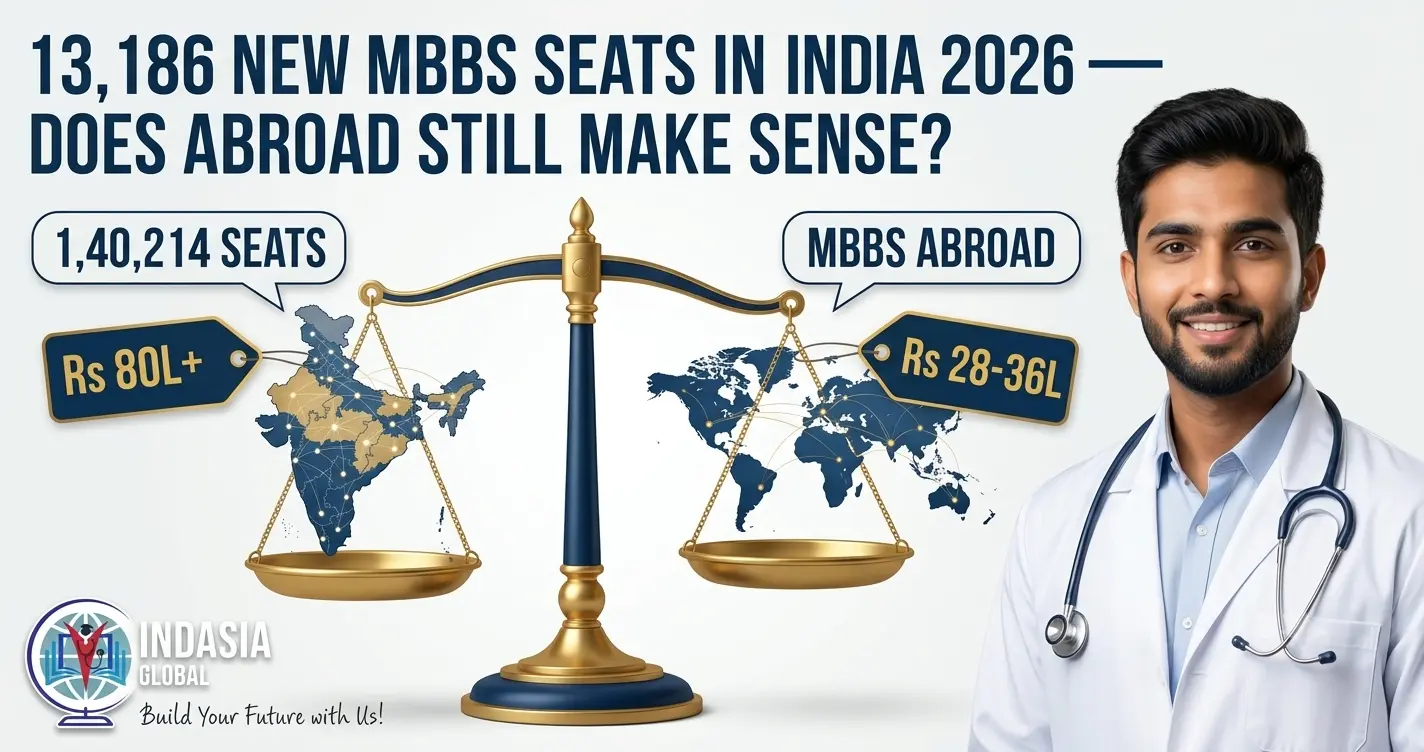
Realistic total cost for a 6-year MBBS program at Georgia’s NMC-approved private universities in 2026-27, including tuition, hostel, food, and living expenses, is approximately Rs 40 to 65 lakhs. This is higher than Kazakhstan, which remains at Rs 28 to 36 lakhs total, but Georgia’s FMGE pass rates — particularly at GAU and BAU — remain the strongest justification for the premium.
What Jaipur Students Should Do Right Now
If you are a student or parent in Jaipur currently evaluating Georgia for 2026-27, here is what you need to do before making any commitment.
First, confirm that the university you are considering is a private institution on the NMC-compliant list, not one of the four state universities that are now closed. Do not rely on older blog posts or outdated consultancy materials that still recommend TSMU without noting the closure.
Second, ask specifically for the university’s individual FMGE pass rate — not the Georgia country average, which can be misleading. The range across universities is enormous, from 22 percent to 80 percent in 2024.
Third, update your budget expectations. If a consultant is still quoting Rs 25 lakhs for Georgia, they are using pre-ban state university figures. Get a written, itemized breakdown that reflects private university fees for 2026-27.
At Indasia Global’s Jaipur office, we have updated all our Georgia counselling to reflect the post-ban reality. We guide families toward only NMC-compliant private universities and provide university-specific FMGE data before any recommendation is made. For families where budget is the primary constraint, we also offer Kazakhstan as a strong alternative, where our resident team in Almaty under Dr. Tara Chand Nehra provides on-ground support from Day 1.
Frequently Asked Questions
1. Is MBBS in Georgia completely banned for Indian students in 2026? No. The ban applies only to Georgia’s state-funded universities. All NMC-approved private medical universities in Georgia — including GAU, BAU, East European University, and Caucasus International University — remain fully open for Indian students in 2026-27.
2. Which Georgia universities are now closed for new Indian students? Tbilisi State Medical University, Batumi Shota Rustaveli State University, Ivane Javakhishvili Tbilisi State University, and Akaki Tsereteli State University are closed for new international admissions from 2026-27.
3. Are students already studying at Georgia’s state universities affected? No. The policy change applies only to new admissions. Students currently enrolled at TSMU and other state universities continue their programs without disruption.
4. Which Georgia university has the best FMGE pass rate after the state university ban? Georgian American University recorded 80.33 percent in FMGE 2024 — the highest of any Georgia university and among the highest globally. BAU International University recorded 63.29 percent in the same year. Both are private universities and both are fully open for 2026-27 admissions.
5. Is Georgia still worth considering for MBBS after this change? For families with a budget of Rs 40 to 65 lakhs and FMGE performance as the top priority, yes — Georgia’s top private universities deliver FMGE outcomes that no other MBBS abroad destination can match. For budget-conscious families, Kazakhstan’s NMC-compliant universities at Rs 28 to 36 lakhs total remain the strongest alternative.
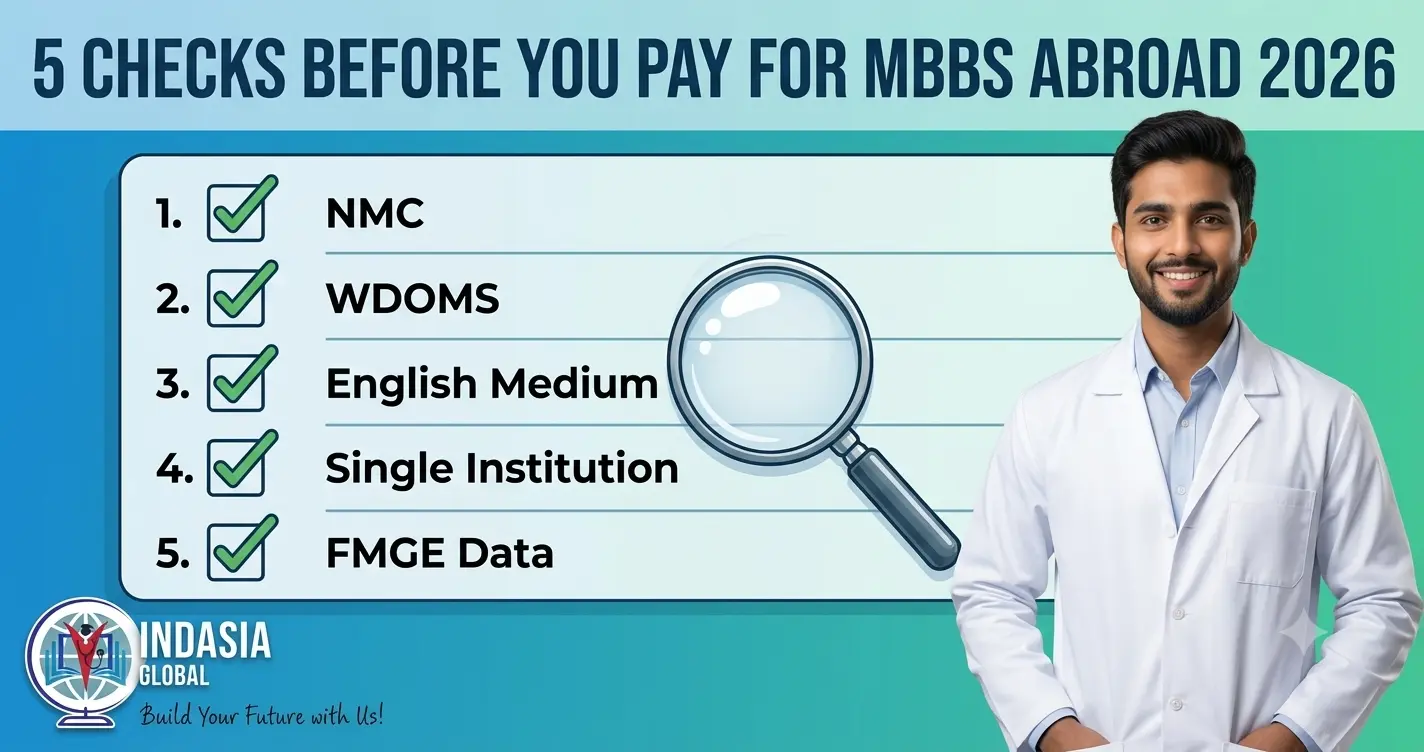
6. How do I verify that a Georgia university is NMC-compliant in 2026? Check directly at nmc.org.in and cross-verify at wdoms.org. Do not rely solely on what a consultant tells you — verify independently before making any payment.
Confused about Georgia’s 2026 policy change and what it means for your child’s MBBS plans? Contact Indasia Global for an updated, honest assessment from our Jaipur office. If Georgia’s updated fees are above your budget, we can also guide you toward MBBS in Kazakhstan, Russia, Uzbekistan or Kyrgyzstan — all with NMC-compliant university recommendations and no hidden charges.